
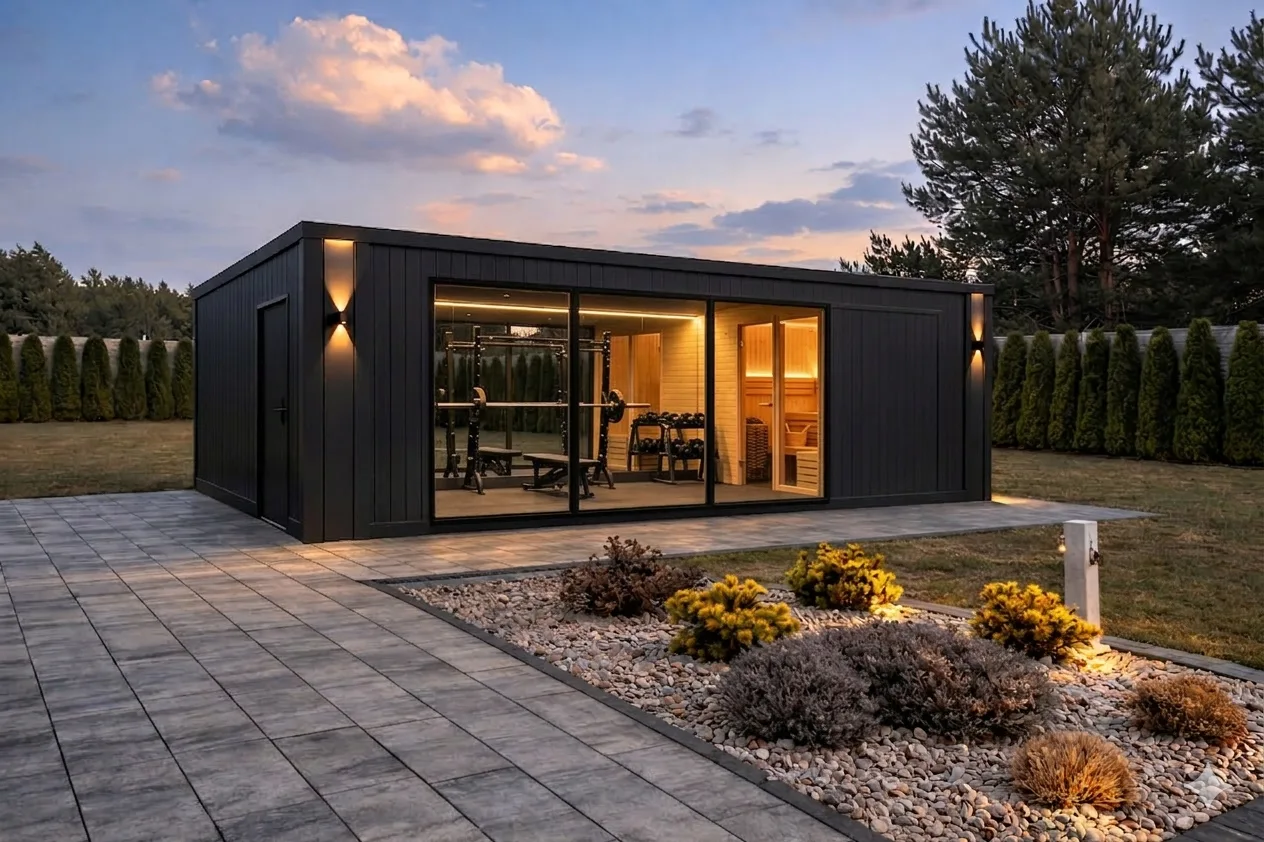
An unmanned 24/7 gym is one of the few business models where the unit can be earning at 3am while you sleep. The doors open, members train, payments land in your account automatically.
But only when the location is right, the access system is reliable, and running costs stay under control. What follows is an honest analysis — with numbers, not sales talk.
Why unmanned rather than a staffed gym?
| Criterion | Staffed gym | Unmanned |
|---|---|---|
| Staff cost | £1,800–5,000/month | £0 |
| Opening hours | 6am–10pm | 24/7 |
| Premises | lease £600–2,500/month | your own Gym Box |
| Scalability | every town = a new hire | one system, many sites |
| Break-even | 40–80 members | 25–45 members |
A staffed gym needs a lot of members to cover its fixed costs. An unmanned site has very low fixed costs, so the break-even point sits much lower.
Where does an unmanned gym actually earn?
Locations that work
➜ Residential suburbs — people want to train at 6am or 10pm and can’t be bothered driving into the centre ➜ Smaller towns of 10,000–50,000 — no big chain gyms nearby, low saturation ➜ New-build estates of 200+ homes — a captive audience, nobody has to travel ➜ Business parks and office clusters — staff train on a break or after work ➜ Holiday areas (coastal, Lake District, Highlands) — guesthouse guests and second-home owners
Locations that don’t
➜ Within 500 m of a PureGym or The Gym Group site — at £20–25/month they are very hard to undercut ➜ Tiny villages with no settled population — no membership base ➜ Sites with no parking and poor access — especially for members arriving by car or bike
The financial model — three scenarios
Shared assumptions
➜ Gym Box 9×3 Standard + access control + CCTV ≈ from £35,000 turnkey (the 9×3 Standard is from £24,000 incl. VAT; the rest is access tech, monitoring, foundation and delivery) ➜ Membership price: from £30/month ➜ Running cost: from £180/month (electricity + internet + access software + cleaning + maintenance)
| Scenario | Members | Revenue | Costs | Net profit | Annual ROI | Payback |
|---|---|---|---|---|---|---|
| Pessimistic | 25 | £750 | £180 | £570/mo | 20% | 5.1 yrs |
| Realistic | 45 | £1,350 | £180 | £1,170/mo | 40% | 2.5 yrs |
| Optimistic | 70 | £2,100 | £180 | £1,920/mo | 66% | 1.5 yrs |
Takeaway: at 45 members — realistic for a residential suburb after about six months of trading — payback lands at roughly two and a half years. The higher member-to-cost ratio of UK pricing makes the maths work harder here than in many markets.
These are illustrative figures, not a forecast. Treat membership price, occupancy and running costs as the levers you control, and confirm your own numbers with an accountant before committing.
Extra revenue beyond memberships
➜ Day passes: from £6–8 per visit (visitors, occasional users) ➜ Hourly hire (small groups, PT sessions): from £12–18/hour ➜ Short-term passes (week, weekend): from £8–12
How to find a good location
A simple method before you invest:
Step 1: Check the competition within 3 km
➜ Google Maps → “gym” — how many players, how far, what prices ➜ Avoid sites with a budget chain under £25/month inside a 2 km radius
Step 2: Estimate the catchment
➜ ONS / local census data: population in the ward or town ➜ Rule of thumb: ~3–5% of residents are realistic gym prospects ➜ For 2,000 residents: 60–100 potential members ➜ Realistic capture: 30–50%
Step 3: Sort out land or a lease
➜ Your own plot: lowest running cost, highest ROI ➜ Private lease (e.g. beside an estate): from £400–1,200/month — still viable ➜ Lease from a developer or management company: from £250–700/month, but the process is slower
Worth reading alongside this: our guide to the unmanned Gym Box configuration and the practical self-service container gym write-up.
The chain model — scaling to 5–10 sites
One owner, many units. The key elements:
1. Standardise the unit
Every site identical or near-identical: the same Gym Box, the same spec, the same kit. You clone a proven build instead of designing each location from scratch.
2. One central management system
A single platform handling access, memberships and payments across every site. A member in Manchester can train in Leeds on the same subscription (a premium cross-sell).
3. Servicing and upkeep
➜ Equipment service contract (inspection every 6 months) ➜ Cleaning crew every 2–3 days (outsourced) ➜ Remote monitoring — cameras and an alarm system at each site
4. Funding the next units
Once the first site is profitable, its cash funds the second. A snowball model. Asset finance can bridge the gap — see leasing vs loan for the trade-offs.
Rough sum: three sites each netting from £1,200/month = from £3,600/month, near-passive — before tax and reinvestment.
Risks nobody likes to mention
➜ Vandalism and break-ins — especially in the first months. Monitoring + good external cameras + contents insurance = mitigation. ➜ Low occupancy — weak marketing means the unit won’t earn. A marketing plan is part of the investment, not an afterthought. ➜ Technical faults — a failed smart lock or access outage means members can’t get in: lost revenue and lost trust. Keep a backup (spare code, an on-call engineer’s number). ➜ Local rules — a commercial gym may need planning permission, and you’ll likely face business rates rather than council tax on the site. Check planning with your local authority and the tax position with your accountant before buying land.
Thinking about an unmanned gym as an investment? Let’s talk through the numbers.
Free consultation, a reply within 24 hours — no obligation.
➜ Get in touch with Gym Assistance ➜ Get a tailored quote ➜ Unmanned gym — how to build it and how it earns