
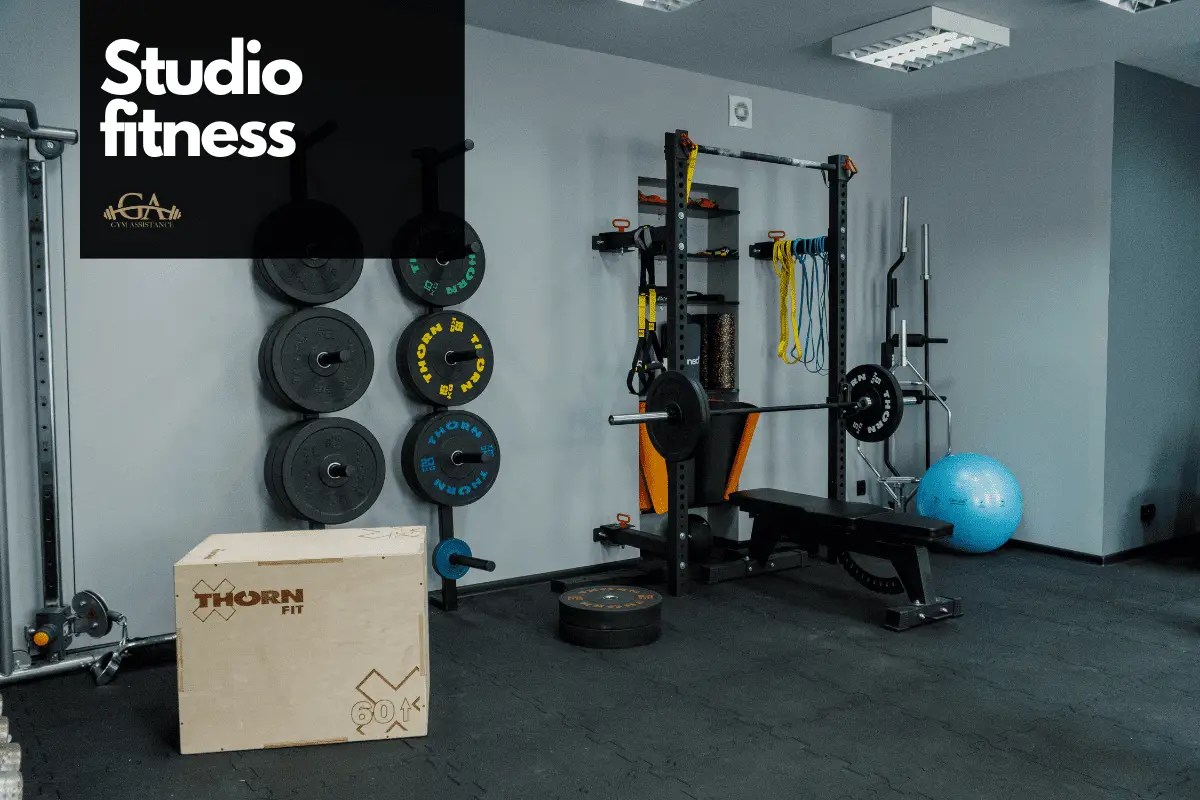
Guests increasingly filter for hotels with a gym — not because they are fitness fanatics, but because training on a work trip or a longer stay has become part of expected comfort. On Booking.com and Google, “fitness centre” sits next to parking and Wi-Fi as a search facet. The question for an operator is no longer whether a gym is worth it, but how to build one cost-effectively.
Why a container, not a conversion?
The obvious first move is to convert a room or back-of-house space. The problem: a bedroom turned into a gym is lost room revenue — for a mid-market UK property that is easily £15,000–£40,000 a year at average occupancy. And the conversion itself costs money: design, building works, a possible change-of-use question, and weeks with the space out of action.
A garden container gym sidesteps all of that:
- Zero rooms lost ➜ the gym goes up outside the building, in the garden, car park edge or courtyard
- Short lead time ➜ typically 6–10 weeks from order to opening (see our lead-time guide)
- Lower entry cost ➜ from £24,000 incl. VAT for a fully fitted Gym Box 9×3, versus the much larger spend a room conversion soaks up
- Scalable ➜ when demand grows you add a second module rather than rebuilding
How much more will guests pay for a hotel with a gym?
UK hospitality data points the same way: an on-site fitness facility tends to translate into:
- A higher Average Daily Rate (ADR) — typically £4–£10 per night in the 3–4 star segment, more in business-led city locations
- A higher share of direct repeat bookings — guests return to properties they know and rate
- Better OTA scores — the “facilities” sub-score is a real ranking lever on Booking.com and Expedia
A gym does not rescue a poorly run hotel. But for a property already competing on amenities, it is one of the cheapest ways to move the facilities score and justify a rate bump.
ROI worked example — a 20-room hotel
A deliberately conservative model:
Property parameters:
- 20 rooms, ADR £110 per night
- Occupancy: 60% per year (≈ 4,380 room-nights sold)
- Rate uplift attributed to the gym: +£6/night
Additional revenue: 4,380 room-nights × £6 = £26,280 per year
Container gym cost (Gym Box 9×3, commercial fit-out):
| Item | Cost |
|---|---|
| Module + commercial equipment | from £24,000 incl. VAT |
| Foundation, services, groundworks | from £1,800 |
| Total | ≈ £25,800 |
Payback: inside the first year.
This is a simplified model — not all of the rate uplift is down to the gym, and occupancy moves around. But even if the gym is responsible for only half the uplift, payback still lands within about two years. For a full, real-world breakdown with Booking.com data, see our hotel gym ROI case study, or run your own numbers in the ROI calculator.
VAT-registered hotels recover the 20% VAT, and the unit typically qualifies as plant for capital allowances — but confirm the treatment with your accountant.
Gym Box 7×5 — the hotel standard
For hotel use we usually recommend the Gym Box 7×5 (35 m², studio-level). It comfortably holds:
- Cardio zone — 2 treadmills, plus a bike or cross-trainer
- Strength zone — multi-function rack, free weights, benches
- Stretch / mobility area — mats and foam rollers
- Air conditioning, a wall-mounted TV and an audio system
Four to five guests can train at once; for higher-traffic properties, two linked modules are available.
The equipment spec matters more than in a home gym: kit has to survive years of unsupervised use by many different guests. We brief the equipment selection toward commercial durability rather than the lightest consumer line — a little more up front, fewer replacements later.
Planning — does a hotel need extra permissions?
A garden gym pod sits under the same rules as any small outbuilding, and the exact answer depends on the property and the local authority. In broad terms:
- Permitted development / no full application is often possible where the unit is a modest, single-storey structure on point footings rather than a deep foundation, and is ancillary to the existing hotel use.
- A planning application is more likely where the property is listed or in a conservation area, where there are existing planning conditions, or where the local plan restricts outbuildings.
- Guest-only access — if the gym serves hotel guests rather than paying members off the street, it is treated as an ancillary facility, not a standalone commercial gym, which keeps the compliance picture simpler.
Our planning permission guide covers the principles, but always confirm the specifics with your local planning authority before you order. Gym Assistance helps prepare the documentation for your exact site.
What operators report after opening
The most common observations after 6–12 months:
- A measurable rise in OTA review scores (often 0.2–0.4 points on the facilities sub-score)
- A higher share of business guests and stays longer than three nights
- The gym is effectively self-service — no dedicated staff member required
- Guests cite it as a reason to rebook the same property
For hotels on tight margins fighting to stand out in search, a container gym is one of the shortest-payback investments in the whole amenities category — and one of the few you can install without taking a single room offline.
If you run a guesthouse, boutique hotel or aparthotel, our hotel gym solutions page walks through the commercial options, and you can browse delivered work on the projects page.
Want to see what fits your property and budget?
➜ Book a free consultation — we reply within 24 hours ➜ Get an indicative quote for a hotel-spec Gym Box