
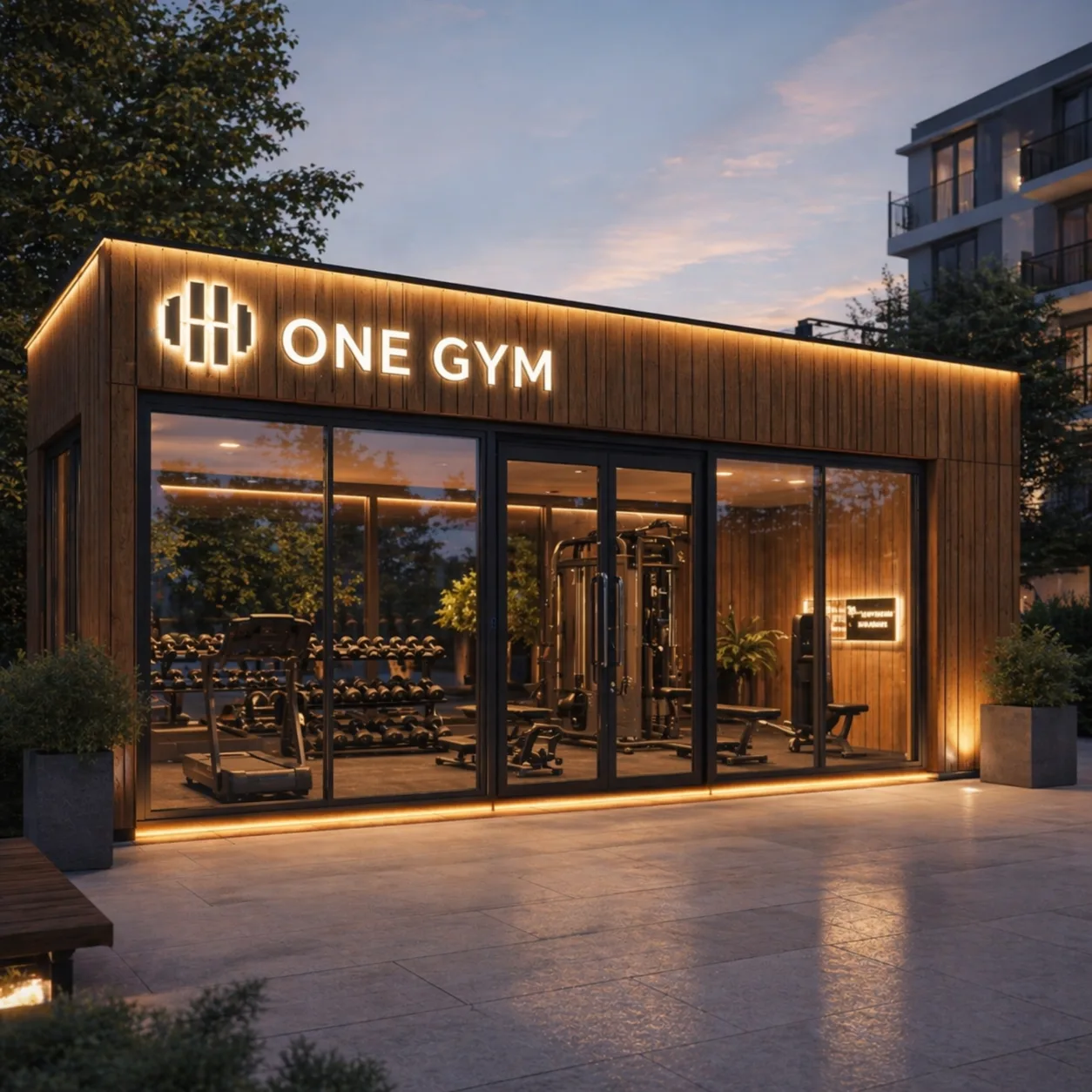
A gym that runs without staff
A container gym sized 30–50 m² can serve 50–150 monthly members at £30–£45 per head with zero staff on site. The model works in the UK: a few operators in commuter towns (Berkshire, Surrey, Cambridgeshire) have turned single Gym Box modules into self-funding micro-gyms with positive cash flow from month 3.
This guide covers the operational setup — what tech you need, what it costs, what insurance asks for.
The five technical pieces
1. Smart lock with audit trail
Industry-standard: Tedee (€250–€400) or Salto KS (£400–£700 per door). Member registers, app generates time-limited code. Operator sees who entered, when, for how long. Tedee integrates with Stripe for membership payments.
2. CCTV — minimum 2 cameras
One above the entrance, one covering the training floor. Reolink or Hikvision cloud-connected models, £150–£300 per camera. Important: NO audio recording (GDPR / DPA 2018 makes this risky without consent signage).
3. Panic button + first-aid
Required by UK insurance for unmanned gyms. St John Ambulance kit (£70) + manual emergency call button hardwired to operator’s phone (£200 install). 99% never used; insurance won’t write policy without them.
4. Smart ventilation
Schedule-based extraction. After-hours intensive ventilation (CO₂ + humidity sensor triggered) keeps the space training-ready for next morning. Setup ~£600 for sensor + relay-controlled fan.
5. Membership platform
Glofox or ClubReady for £80–£150/month — handles signups, recurring payments, no-show tracking, marketing emails. Integrates with Tedee/Salto for auto-unlock on active membership.
Total setup cost
| Item | Cost (£) |
|---|---|
| Container module (8×3 m fitted) | £18,000–£28,000 |
| Smart lock + access control | £400–£700 |
| CCTV (2 cameras + cloud) | £400–£700 |
| Panic + first-aid | £300 |
| Smart ventilation | £600 |
| Membership platform setup | £200 + ongoing |
| Total upfront | £20,000–£30,000 |
| Monthly running | £200–£400 |
Break-even at ~30 active members at £30/month (£900 MRR vs £400 costs + finance).
Insurance and legal
UK self-service gyms need:
- Public liability £5m minimum —
£500–£900/yearfrom Allianz, Hiscox or NFU specialists - Disclaimer + signage — “Train at your own risk, no staff on site, CCTV recorded”
- DPA registration — small fee, required for CCTV
- No swimming pool, no sauna — different licensing regime, avoids fitness centre regs
Most council planning departments treat self-service container gyms as D2 use class (assembly & leisure). Planning permission needed for change of use from C3 garden outbuilding. We can refer planning consultants in your area.
Operating model — realistic numbers
Small commuter town (population 8,000–15,000):
- 35–60 active members at £35/month
- Gross MRR: £1,200–£2,100
- Operating cost: £400/month (£200 platform + £100 utilities + £100 cleaning)
- Net: £800–£1,700/month
Affluent suburb (population 20,000+):
- 60–100 active members at £40–£45/month
- Gross MRR: £2,400–£4,500
- Net: £1,900–£4,000/month after costs
Realistic payback period at full capacity: 18–28 months depending on financing.
What we deliver
We supply the container module + base fit-out (insulation, electrical, flooring, mirrors). Smart lock, CCTV, membership platform — typically integrated by your local AV/IT contractor (we have partners in Greater London and the Home Counties).
Free consultation includes:
- Site visit + planning consultation
- 3D layout for your exact dimensions
- Equipment specification
- Referral to insurance broker familiar with unmanned gyms
Free consultation → — answer within 1 business day.