
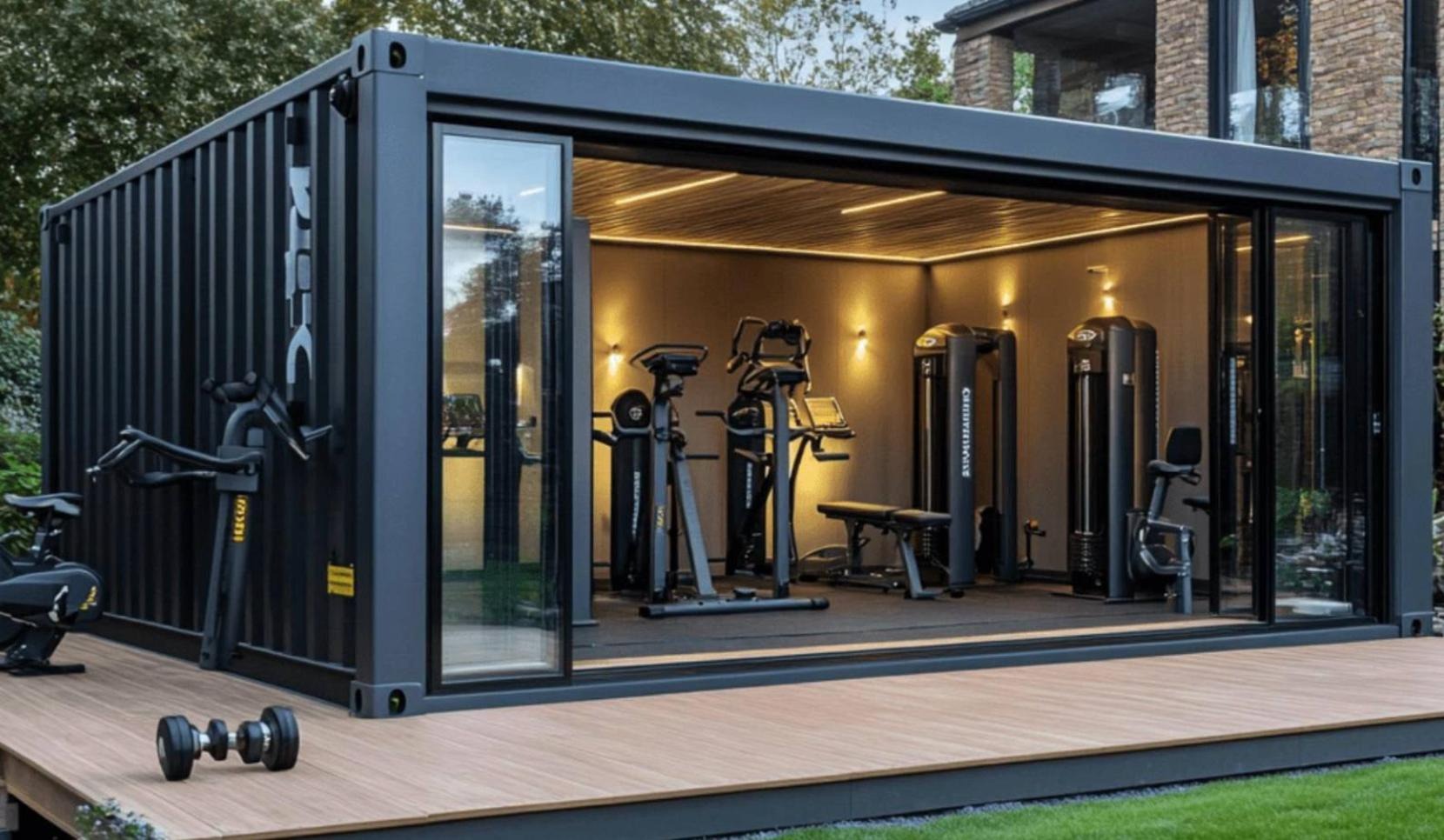
“Lease it or borrow against it?” That question lands in almost every commercial Gym Box conversation we have in the UK — from personal trainers and physios setting up their first studio, to hoteliers and developers adding a guest amenity. The honest short answer: operating lease is fastest, kindest to cash flow in year one, and keeps the asset off your balance sheet. Hire purchase or a business loan gives you ownership from day one and a lower total nominal cost over the long run.
Below we lay out both routes on a concrete UK example: a £20,000 net Gym Box — for instance a Gym Box 7×5 from ~£21,000 net lightly equipped, or a Gym Box 9×3 Standard from ~£24,000 gross (about £19,500 net).
Operating lease — how it works for tax
In an operating lease the Gym Box stays on the lessor’s books for the whole term. Your business uses it like a long-term rental. From HMRC’s perspective:
- The full monthly rental is an allowable expense against trading profits,
- VAT 20% on each rental — recoverable on your normal VAT return if you’re VAT-registered,
- At the end of the term you typically return or extend the asset, or refinance for a small balloon,
- Off-balance-sheet for small companies under FRS 102 1A — useful when applying for working-capital lines.
➜ Full primer in our Gym Box financing options page.
Hire purchase or business loan — how it works for tax
With hire purchase (HP) or a straight business loan you own the Gym Box from day one (HP transfers title at the end, but tax-wise it’s treated as ownership from inception). HMRC treatment:
- VAT 20% is reclaimed in one go on the invoice value at the start,
- Only the interest portion of each payment is a deductible expense — not the capital,
- The Gym Box is a fixed asset and qualifies as plant & machinery for Annual Investment Allowance (AIA) — currently £1m per year, so you can write off 100% in year one,
- The asset and the liability both sit on the balance sheet.
The AIA point is the big swing factor in the UK — it’s the closest equivalent to Poland’s accelerated tax relief and it changes the maths versus countries where you have to depreciate over 10 years.
Side-by-side — £20,000 net, 48 months
Assumptions: business loan APR 9.5%, operating-lease implicit rate ~8.8%, initial rental 10%, balloon 1% of cost. Corporation Tax 25% (the main rate for profits over £250k; the small-profits rate at 19% favours the lease even more strongly).
| Item | Operating lease | Loan / HP with AIA |
|---|---|---|
| Net purchase price | £20,000 | £20,000 |
| Initial rental / deposit | £2,000 | £0 (or ~£4,000 HP deposit) |
| Number of rentals | 47 | 48 |
| Monthly net rental | £420 | £505 |
| Monthly gross (incl. VAT) | £504 | £505 (VAT recovered up front) |
| Total net rentals | £21,740 | £24,240 |
| Balloon / option fee | £200 | — |
| Total net financing cost | £21,940 | £24,240 |
| Year-one tax deduction | £6,720 (10% deposit + 12 rentals) | £20,000 AIA + interest |
| Corporation Tax shield (25%) | £5,485 over the term | £5,500 in year one |
| Effective after-tax cost | ~£16,455 | ~£18,740 (then ~£0 ongoing) |
The lender’s gross interest is higher on the loan, but UK businesses claiming AIA get the lion’s share of the tax benefit in year one, which narrows the gap dramatically versus operating lease. The numbers below get more interesting once you look at cash flow.
Cash flow — year one
| Item | Operating lease | Loan / HP with AIA |
|---|---|---|
| Initial outlay | £2,000 deposit | £20,000 (loan funds asset) |
| Loan principal received | — | £20,000 |
| Year 1 payments (12 × ~£505) | £5,040 (rentals) | £6,060 (capital + interest) |
| Year 1 tax-deductible expense | £6,720 (deposit + 12 rentals) | £20,000 AIA + ~£1,650 interest |
| Year 1 Corporation Tax saving (25%) | £1,680 | £5,412 |
| VAT reclaimed | £1,008 (across 12 rentals) | £4,000 (one shot) |
| Net cash position end of year 1 | −£4,352 | −£3,648 |
➜ Liquidity: the operating lease keeps the initial outlay low (£2,000 vs the loan having to be drawn and serviced). For a sole-trader PT or a hotelier shy of cash, that matters more than the long-run total.
➜ VAT: if your VATable sales are small (a new PT studio with under £90k turnover may not even be registered), the loan’s one-shot £4,000 VAT can take 30–60 days to come back — the lease drip-feeds it.
➜ AIA flip: if your trading profits in year one are big enough to absorb a £20,000 AIA deduction, the loan-with-AIA route is genuinely competitive on after-tax cost. If your year-one profits are modest, the AIA partly goes to waste and the lease pulls ahead.
When the lease wins
✔ Personal trainer, physio, small service business — 24–48-hour credit decisions, low deposit, full rental in costs, no impact on directors’ personal credit.
✔ Hotel or B&B planning expansion — keeps gearing low ahead of a refurbishment loan or a property mortgage. See our hotel gym page.
✔ Business with modest year-one profits — small AIA benefit, so the lease’s smoother deduction profile wins.
✔ No track record yet — operating-lease providers in the UK (Kennet, BNP Paribas Leasing, Close Brothers) look more at recent management accounts than at personal credit files.
✔ You plan to refresh kit at 4 years — return the unit or refinance into a newer model, no second-hand sale to handle.
When the loan / HP wins
✔ Developer, housing association, registered charity — Gym Box sits straight on the balance sheet as a community asset, can be capitalised against the site value.
✔ Plan to keep the unit > 8 years — once the loan is paid, ongoing cost is zero. A lease always carries the lessor’s margin.
✔ Strong year-one profits — AIA gives you a 25% tax saving on the full purchase price right away.
✔ Investment funded partly by grant — most public funds (Sport England Community Asset Fund, regional growth funds) require ownership of the asset on settlement. Operating lease doesn’t qualify. See Gym Box financing.
✔ High-rate Corporation Tax band — for profits over £250k the 25% main rate means AIA in year one is worth more.
The “lease is more expensive” myth
The standard objection: “Leasing always costs more, the lessor needs a margin.”
Nominally — yes, the total of operating-lease rentals typically lands ~5–10% above an equivalent business loan with the same headline rate. But after corporation tax it depends on whether you can use AIA fully:
| Metric | Operating lease | Loan / HP |
|---|---|---|
| Nominal financing cost | £21,940 | £24,240 |
| Corporation Tax shield | −£5,485 | −£5,500 (mostly year 1) |
| Effective 4-year cost | ~£16,455 | ~£18,740 |
The lease usually wins by 8–15% on effective cost over four years for a business with steady but not exceptional profits. For a high-profit company that can fully absorb AIA, the gap closes to within a couple of percent — at which point cash-flow timing and balance-sheet treatment become the decision drivers.
Three traps to watch for
- Finance lease vs operating lease. Under FRS 102 these have different balance-sheet treatments, and the tax-deductible portion of a finance lease behaves more like a loan (depreciation + finance charge), not the full rental. If a broker says “leasing”, confirm in writing it’s an operating lease.
- Initial rental treatment. Several providers let you front-load 6 or 9 monthly rentals as an “initial rental” — useful for crystallising the deduction in a high-profit year, but spread carefully if it exceeds 50% of the asset value (HMRC anti-avoidance).
- VAT on long leases. £20,000 of operating-lease rentals carries roughly £4,300 of VAT over four years. If you ever de-register from VAT (e.g. cease trading the relevant activity) any VAT yet to be reclaimed is lost.
Quick decision matrix
| Your situation | Pick |
|---|---|
| PT, physio, small service, 4–6-year horizon | Operating lease |
| Hotel, B&B, hospitality | Operating lease |
| Developer, RP/charity, community gym | Loan / HP |
| Using a grant | Loan / HP (grant requires ownership) |
| 10-year+ usage plan, modest profits | Loan / HP |
| No filed accounts yet | Operating lease (easier underwriting) |
For most of our UK commercial clients the answer is 48-month operating lease, 10% initial rental, £200 balloon. For developers, housing associations and grant-funded projects — a business loan or hire purchase, ideally arranged through a relationship bank.
Free consultation · Response within 1 working day
We work with four UK lessors and three high-street and challenger banks — we’ll line up real quotes for your scenario and show the after-tax cost on one page. Try our configurator for a starting price, or read the full financing options for your sector. ➜ Get in touch.