
Search “home gym for women” and you get two things: an advert for a set of pink 2 kg dumbbells, and kit lists full of gear you use for a fortnight before it ends up under the bed. Neither is much help.
Here’s the honest answer: what to actually buy for a home gym if you care about results — whether you train for strength, conditioning or both.
Let’s kill a myth first: “women’s equipment”
There’s no such thing as equipment “for women”. There’s equipment matched to your training goals, your experience level and the space you have. The barbell doesn’t know who’s lifting it.
Most women training at home need:
➜ Strength training with progression — the ability to add load as you get stronger ➜ Compound movements — squats, deadlifts, presses, rows ➜ Conditioning and mobility — not as a substitute for lifting, but alongside it
A set of pink 2 kg dumbbells delivers none of those goals beyond about week four.
What you actually need — in priority order
Stage 1: The base (from £1,000–2,000) — start here
| Equipment | Cost | Why |
|---|---|---|
| Adjustable dumbbells 2–24 kg (one pair) | from £120–280 | Replaces a full rack, saves space |
| Exercise mat, 10 mm | from £40–90 | Stretching, core, yoga, floor work |
| Resistance bands (set of 5) | from £20–60 | Glutes, mobility, warm-up activation |
| Pull-up bar (doorway-mounted) | from £30–70 | Upper body, hangs, suspension trainer |
| Kettlebell 12–16 kg | from £50–90 | Swings, goblet squats, rows |
| Skipping rope | from £10–30 | Conditioning |
Total: roughly from £300–550. Enough for a solid year of training.
Stage 2: Strength kit with progression (from £2,500–5,500)
When Stage 1 stops being enough — which, if you train three times a week, usually happens within 3–6 months.
| Equipment | Cost | Why |
|---|---|---|
| Squat rack / half rack | from £300–900 | Barbell squats, presses, pull-up bar |
| Olympic barbell (15 kg) + plates (40 kg) | from £300–550 | Deadlifts, Romanian deadlifts, squats |
| Adjustable bench | from £150–350 | Bench press, rows, dumbbell work |
| Extra fixed dumbbells 10–20 kg | from £130–250 | Loaded carries, unilateral work |
| Cable machine (optional) | from £600–1,300 | Pulldowns, rotations, cable kickbacks |
Stage 2 total: roughly from £1,500–3,300.
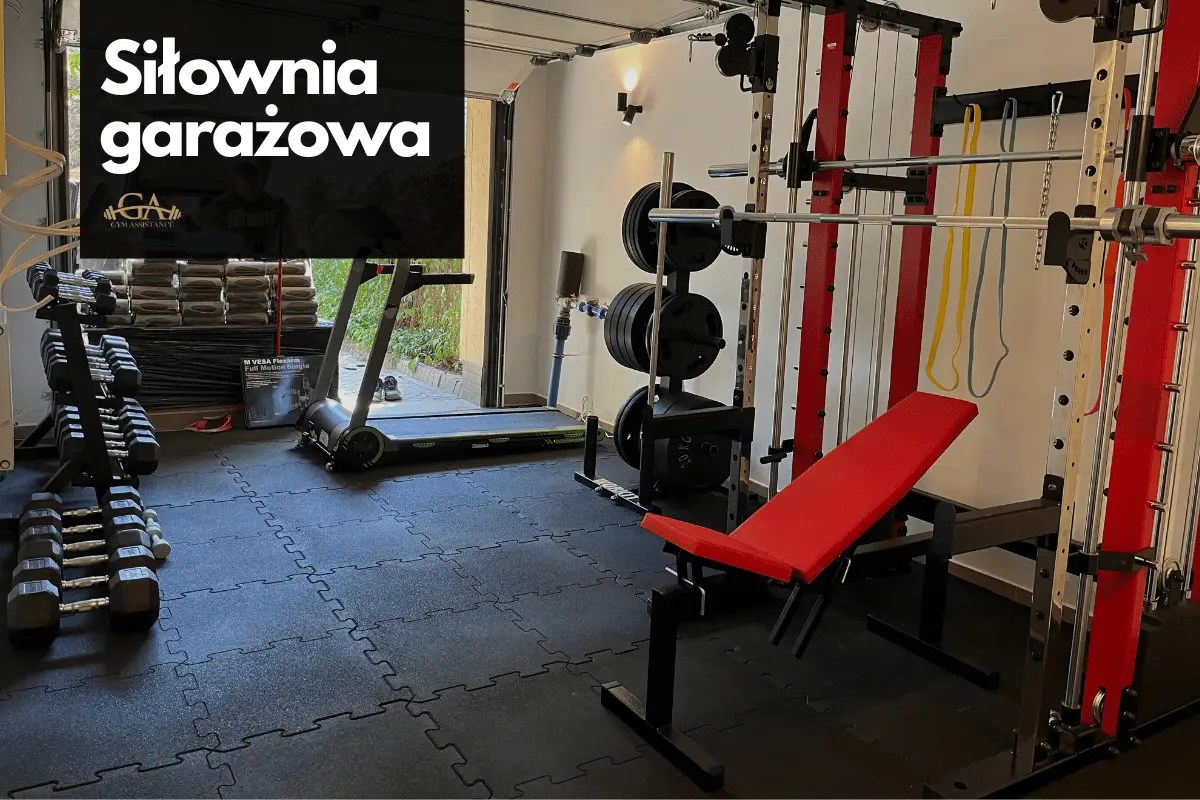
A barbell, a rack and a bench will take you years — there’s no progression ceiling you’ll hit at home. This is the same core kit any serious lifter uses; see our best home gym equipment guide for specific picks.
Stage 3: The space and the comfort (from £3,000–8,000+)
When you want an actual gym, not a corner with some dumbbells in it.
➜ A dedicated room — garage, spare room, basement, or a garden Gym Box ➜ Rubber flooring — 20–30 mm, protects your kit, your floor and your joints ➜ Wall mirror — for technique, and it makes a small space feel bigger ➜ Air conditioning — in a sealed room over summer, you’ll want it ➜ Lighting — bright, diffuse, nothing glaring overhead
This is the stage where “I keep meaning to train” turns into “I train”. A converted garage or spare room is the cheapest route; a garden Gym Box is the route most of our clients take when they want it separate from the house.
A women’s home gym in a Gym Box — what we design most often
A growing share of our clients are women who want a dedicated training space at home — not a corner of the garage, but a proper gym. The brief is almost always the same: somewhere private, somewhere that looks good, somewhere they’ll actually go.
The most common layout for a Gym Box 8×3 or 9×3:
➜ Strength zone: multi-function rack + free weights + dumbbells ➜ Mobility zone: mat, bands, foam rollers ➜ Mirror, 2×2 m or full-wall ➜ Soundbar and speakers ➜ Split air conditioning ➜ Brushed-timber or carpet-tile flooring instead of “gym” rubber puzzle mats — because how the room looks matters, and it should feel like a space you want to be in
Our home gym in Skawina is a good example of this brief delivered: a quiet, private training room a few steps from the back door.
Does this sound familiar?
“I’ve got an exercise bike, a set of bands and some 3 kg dumbbells in the spare room. I haven’t trained in a year.”
That’s a comfort-and-motivation problem, not an equipment problem. A dedicated space — a separate room, not the corner of a living room — changes it completely. Clients who move their training into a Gym Box report turning up 4–5 times a week where it used to be once or twice.
A separate space changes how you show up. The barrier to training stops being willpower and becomes geography — and geography is easy to win.
Three budgets, three starting points
➜ Got from £250–450 and a small room? → Adjustable dumbbells + kettlebell + bands. Start, and find out whether you train consistently before spending more. ➜ Got a garage or a spare room? → Rack + barbell + bench. A full, no-ceiling setup that lasts for years. See our garage gym setup guide for the layout. ➜ Want a real gym at home? → A Gym Box 8×3 or 9×3. Your space, your rules, training on your schedule. Run the numbers on our size comparison to see which suits your garden.
A quick note on the bigger budgets: how a home gym is treated for tax depends on whether it’s purely personal or partly used for a business (a PT, an online coach, a sole trader). If that applies to you, it’s worth a five-minute chat with your accountant before you buy.
We’ll design a gym built around you and how you actually train — free consultation, no obligation, reply within 24 hours.
➜ Get in touch with Gym Assistance ➜ Build your quote in the configurator