
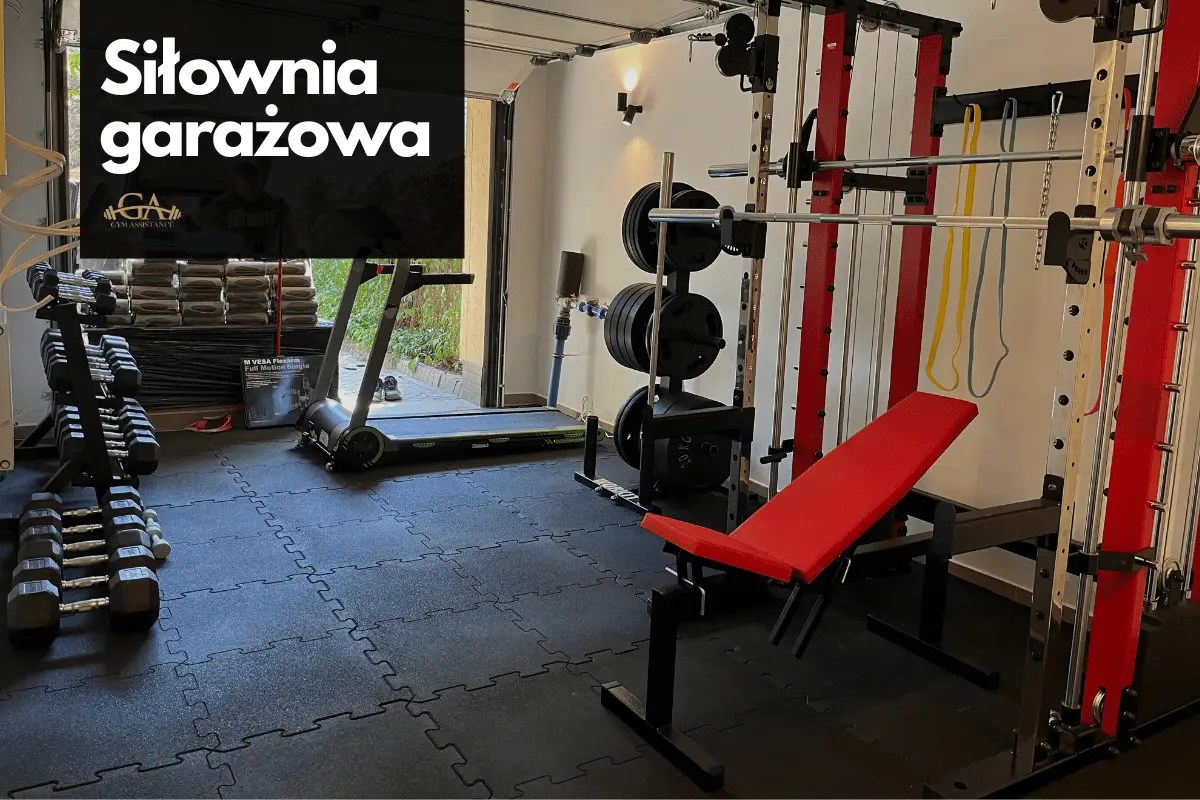
The basement, cellar or under-stairs vault is just sitting there — empty, or stacked with boxes. You’ve got 20–30 m² under the house and you’re wondering: can I turn this into a gym?
Short answer: yes, but only if a few key conditions are met. If they aren’t, the money you sink into converting the basement is money wasted.
Here’s an honest guide to help you make the right call before you spend a penny.
Basement gym — yes or no?
Before you measure or cost anything, answer three questions:
1. Do you have at least 2.3 m of clear height? That’s the absolute minimum for safe free-weight training. For standing overhead press you want 2.5 m (your height plus the bar above your head). If the ceiling is lower, some lifts become impossible or unsafe. UK period properties and Victorian cellars are notorious for low headroom — measure before you dream.
2. Is there a window or vent, or can one be fitted? Training generates a lot of CO₂ and moisture. Without a route for ventilation, a basement is not fit for a gym — no negotiation.
3. Are the walls and floor dry? Damp in a basement destroys steel equipment within 2–3 years. Watching a £1,600 power rack rust from the inside out is an expensive lesson. UK below-ground rooms are particularly prone to penetrating and rising damp.
Answered “yes” to all three? Read on. If not, skip ahead to “When a basement is the wrong choice.”
The key technical requirements
Ceiling height — minimum and ideal
| Room height | What you can do |
|---|---|
| Below 2.0 m | Stretching, kettlebells, mats only |
| 2.0–2.3 m | Seated and lying exercises, bike, cross-trainer |
| 2.3–2.5 m | Most strength work with a rack |
| Above 2.5 m | Full freedom, including standing overhead press |
If you have exposed joists or steel beams, measure to their lowest edge, not to the underside of the floor above.
Damp — how to check and what to do
Correct humidity for a gym: 40–60%. A typical un-tanked UK basement: 70–90% through the warmer, more humid months.
Step 1: Diagnose. Buy a hygrometer (from £15) and leave it in the basement for 24 hours. Anything reading above 70% means you have a problem to solve.
Step 2: Find the source. Moisture comes from one of three places:
- Ground water — penetrating or rising damp, wet floor, salt staining (tide marks) on walls. Costly to fix properly.
- Condensation — warm moist air hitting cold surfaces, usually from poor ventilation. Relatively easy to fix.
- Plumbing leaks — a job for a plumber.
Step 3: Fix it.
- Internal tanking / cavity drainage membrane: from £3,500 for a small room
- Dehumidifier (running continuously): from £200, plus roughly £20–40/month in electricity
- Mechanical ventilation with heat recovery (MVHR): from £1,500
Damp proofing a habitable basement is one of those jobs worth getting a specialist (and a survey) on. Cutting corners here is the single most common basement-gym mistake.
Ventilation — more than a window
A single air brick isn’t enough for intense training. You need active airflow: supply in, extract out.
Minimum: an extractor fan plus an inlet vent on the opposite side of the room. From £250.
Ideal: a heat-recovery unit with a filter. It clears moisture, recovers warmth and filters the air. From £1,500.
Basement conversion cost breakdown
Basic option: from £2,000
Assumes a dry basement, 2.3 m+ height and an existing vent.
| Item | Cost |
|---|---|
| Rubber matting, 15 m² (20 mm) | from £350 |
| Extractor fan | from £120 |
| LED lighting | from £150 |
| Dehumidifier | from £200 |
| Electric heater / panel | from £150 |
| Basic kit (rack + free weights) | from £1,300 |
| Total | from £2,300 |
Complete option: from £6,000
Assumes a full conversion plus equipment with no compromises.
| Item | Cost |
|---|---|
| Wall and ceiling insulation | from £1,400 |
| Damp proofing / tanked floor + sports flooring | from £1,500 |
| MVHR unit | from £1,500 |
| Split air conditioning | from £1,200 |
| LED lighting + audio | from £400 |
| Mirrors, 4 m² | from £300 |
| Complete equipment package | from £3,000 |
| Total | from £9,300 |
For a full cost breakdown across different home-gym setups, see How much does a private gym cost? — it covers the same numbers in more detail.
Sample kit for a 20–25 m² basement
With 2.4 m of height and a properly prepared room, you can fit:
- A power rack with no top extensions (lower profile)
- An Olympic bar plus plates up to 140 kg
- Adjustable dumbbells, 5–32 kg
- An adjustable FID bench
- A stationary bike (low profile, quiet)
- A wall-mounted pull-up bar
- A kettlebell set (12, 16, 20, 24 kg)
Below 2.3 m of height, drop the rack entirely — focus on dumbbells, kettlebells and low-profile machines. For matching kit to a specific footprint, our guide on the best home gym equipment goes deeper.
When a basement is the WRONG choice
Three situations where you should look elsewhere:
1. Active ground-water damp. If water pools on the floor after rain, or the walls “weep” and grow a grey-white salt bloom, you have a waterproofing problem. Fixing it properly is expensive (often well into four figures) and not always a permanent cure. Don’t put training equipment in a room like that.
2. Headroom below 2.1 m. Below that threshold training is restricted, and free-weight work is potentially dangerous.
3. The basement is your only storage. If it holds the bikes, the Christmas decorations and the spare-room overflow, the constant battle for space will cost you motivation faster than any missed session.
In those cases it’s worth weighing up other options. A garage — if you have one — is often the better bet: higher ceiling, an up-and-over door instead of a tight stairwell, and far easier ventilation. See: Garage gym — how to set one up.
And if you want a dedicated training space from scratch, with no compromises forced by the existing building, a garden gym pod sidesteps the whole damp-and-headroom problem. It arrives finished, insulated and ventilated — no excavation, no tanking, no fighting the architecture. Compare the two approaches in garden gym vs. home gym.
A note on regulations
Converting a basement into a habitable room can trigger Building Control approval in the UK, and changing its use or excavating to lower the floor may even need planning permission. If you share a wall with a neighbour, the Party Wall Act can also come into play. None of this is usually a deal-breaker for a simple gym fit-out — but it’s worth a quick call to your local authority’s planning department before any structural or excavation work. Treat anything here as general guidance, not legal advice.
Summary: the basement-gym checklist
Before you commit, confirm:
- Room height ≥ 2.3 m
- Humidity below 65% (or a realistic way to lower it)
- Mechanical ventilation can be fitted
- Dry walls and floor, no sign of ground-water damp
- Access (the stairs won’t block you carrying equipment in)
- A 230V supply, ideally on its own circuit
Tick every box and a basement can make a superb gym. Don’t tick them all? Don’t fight the building — there are better routes.
Got a basement and not sure what to do with it?
Tell us about the space — the dimensions, the damp situation, the access — and we’ll give you a straight answer on whether it’s worth converting and how to do it sensibly. Free consultation, reply within 24 hours.
➜ Get in touch with Gym Assistance ➜ Get an instant quote
Related articles: