
You work as a personal trainer — renting floor space by the hour, training clients in their homes, or paying a commercial gym for slots. Sooner or later the question comes up: wouldn’t it be better to have your own space? Somewhere you set the hours, the prices, the atmosphere and the kit.
It’s a natural step in a PT career. But opening your own studio is a serious financial decision. Before you commit, look at the real costs — and the alternatives.
Two routes to your own PT studio
Route 1: Rent and fit out a high-street unit
The classic path. A unit in town, fit-out, refurbishment, equipment.
| Cost | Range (2026) |
|---|---|
| Deposit + first month’s rent | from £1,800 |
| Refurb and fit-out (50 m²) | from £6,500 |
| Training equipment | from £5,500 |
| First 6 months’ rent | from £6,500 |
| Total cost to launch | from £20,000–48,000 |
Monthly rent on a 500 sq ft (≈50 m²) unit in a decent location: from £700–1,500 per month, on top of business rates. That’s a fixed cost regardless of how many clients walk through the door — and most commercial leases tie you in for years.
Route 2: Your own Gym Box — a PT studio at home or on a plot
An increasingly popular model. The trainer puts a Gym Box in their own garden, or on a small plot rented away from the town centre — and runs one-to-one sessions and small groups (2–4 people).
| Cost | Range (2026) |
|---|---|
| Gym Box 9×3 or 7×5 | from £21,000 |
| Foundation + utility connection | from £1,800 |
| Additional training equipment | from £2,200 |
| Total cost to launch | from £25,000–40,000 |
Monthly running cost after purchase (electricity + servicing): from £60–130. No rent, no lease, no landlord.
➜ For a full price breakdown by size, see How much does a private gym cost.
When does a Gym Box make sense for a PT?
A Gym Box is a good fit if:
➜ You have access to a plot (your own garden, or one rented cheaply outside the town centre)
➜ You mostly train one-to-one or in pairs (2–4 people) — exactly the PT format
➜ You want to avoid carrying rent and a long lease from day one
➜ You value autonomy and your own brand identity (“My private PT studio”)
➜ You don’t need 10 people on the floor at once — just 1–4 per session
A Gym Box isn’t the right fit if:
➜ You run large group classes (15+ people) — the space is too small
➜ You depend on high-street footfall (signage, shopfront, walk-ins)
➜ You don’t have access to a suitable plot
➜ Weighing it against a commercial unit? Read Container gym vs home gym for the trade-offs.
Kit list for a PT studio in a Gym Box
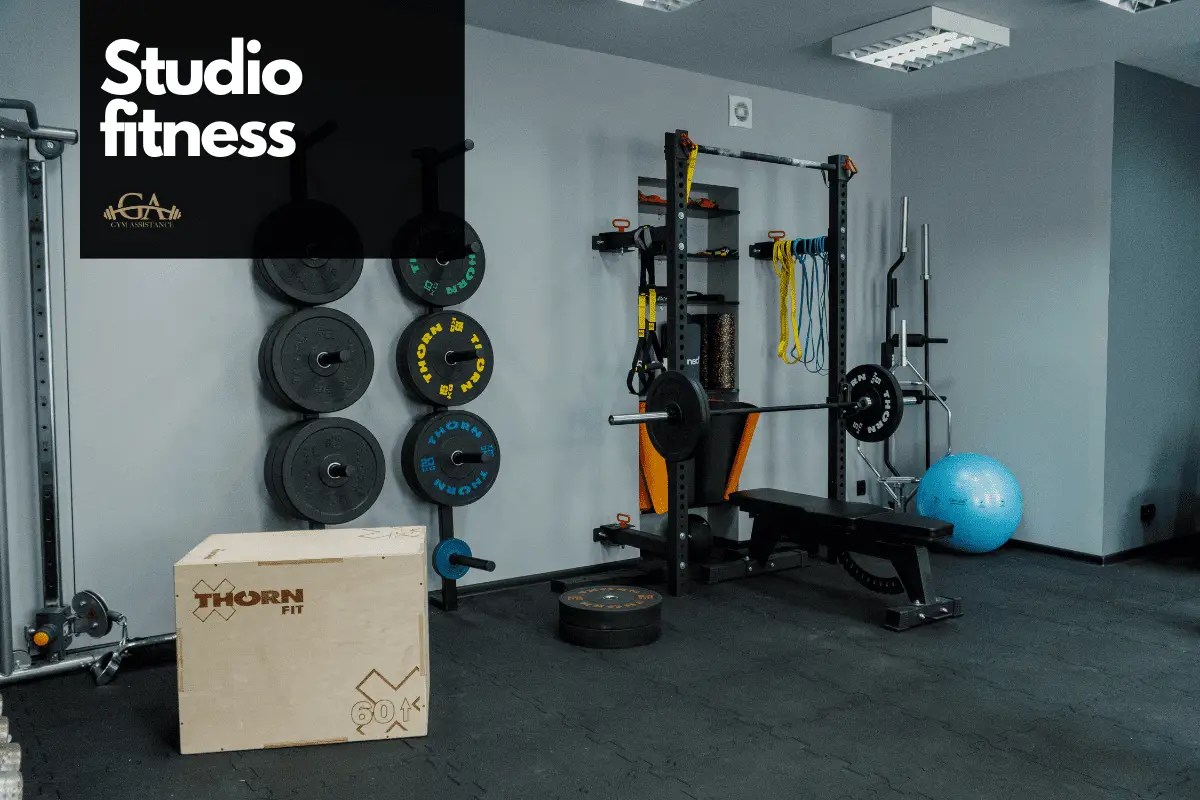
A sample layout for a Gym Box 9×3 (27 m²) set up for one-to-one work:
Strength zone:
➜ Multi-function cable cage
➜ Olympic barbell + plates (60–100 kg)
➜ Dumbbells from 5 to 30 kg (full set)
➜ Adjustable bench
Functional zone:
➜ Kettlebells (16–32 kg, 4–5 of them)
➜ TRX / pull-up bar
➜ Plyo boxes (2–3 heights)
➜ Battle rope, resistance bands
Cardio zone (optional):
➜ Air bike or upright bike
➜ Rower or curved manual treadmill
Studio fit-out:
➜ Full-length mirror on one wall (optional)
➜ Bluetooth speaker / soundbar
➜ Split air conditioning (heating and cooling)
➜ Whiteboard for the client’s session plan
Budget for the kit above: from £2,200, scaling with how much you specify.
The paperwork for a PT studio
If you’re training paying clients commercially, the studio is a place of business. The essentials in the UK (confirm specifics with your accountant and local authority):
➜ Trading structure — sole trader or limited company. A limited company can be more tax-efficient once profits build up; ask your accountant which suits your numbers
➜ Public liability insurance plus professional indemnity / personal-trainer cover — non-negotiable for client work
➜ Professional registration — CIMSPA membership (or equivalent) is increasingly expected and helps with insurance and credibility
➜ Planning — a garden studio often falls under permitted development, but it depends on size, siting and whether you’re running a business from it. Check with your local planning authority before you build. See Garden gym planning permission in the UK
➜ Business rates — running a business from a garden building can change your rates position; your local council can confirm
➜ Music licensing — if you play music during sessions you may need a licence (PPL PRS)
Treat this list as a starting point, not legal advice — the details vary by council and by your circumstances.
A real example: a PT studio in a Gym Box 7×5
The client: a personal trainer with five years’ experience, until then renting slots in a commercial gym.
What they built:
➜ Gym Box 7×5 m (35 m²), studio-level spec
➜ Multi-function cage + free weights + two cardio machines
➜ Air conditioning, full-wall mirror, soundbar
➜ Easy access off the main road, parking on the plot
Budget: from £33,000 all in (module + foundation + equipment)
Business model: 5–6 sessions a day at £50–60/hour, 4 days a week. At full occupancy that’s roughly £4,000–5,000 in monthly revenue — and with no rent, the gap between revenue and cost is wide from the first year.
Payback on the build: with steady occupancy, the studio recovers its cost inside the first 18 months and then runs on near-zero overhead. Run your own numbers in the ROI calculator.
The project above was built in Poland — we manufacture there and deliver across the UK and Ireland as standard, so the spec and price logic carry over directly.
Rent or own — the honest summary
Renting a high-street unit buys you footfall and a visible address — at the price of a lease, rent every month and business rates whether you’re booked out or empty. Owning a Gym Box buys you near-zero overhead and full control — at the price of needing a plot and not getting passing trade.
For a trainer whose clients book ahead and come for the trainer (not the shopfront), the Gym Box route usually wins on the maths. For a studio built on walk-ins and group classes, the unit still makes sense.
Planning your own PT studio? Let’s talk it through.
➜ Get a tailored quote — free consultation, reply within 24 hours
➜ Get in touch with Gym Assistance
➜ Personal training studio — models and pricing