
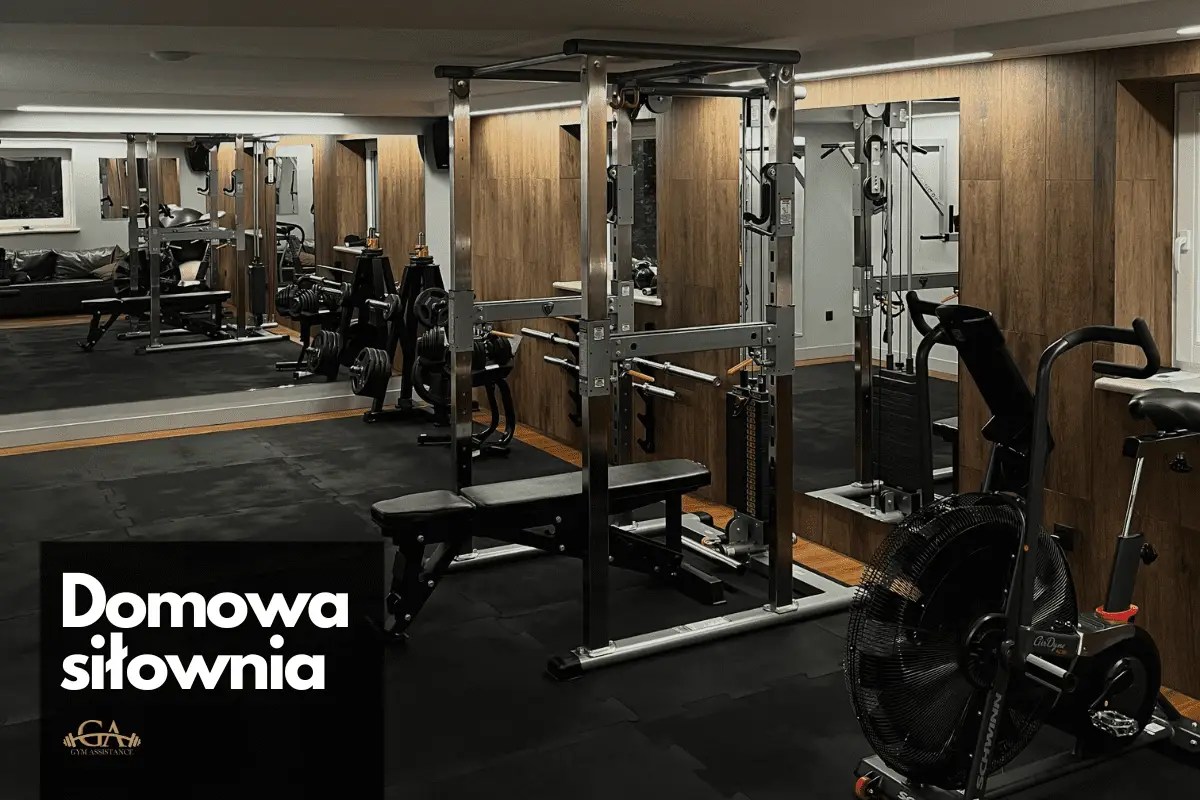
You’ve got a home gym — or you’re building one right now. Then comes the real question: where do you start? Most training plans you find online are written for a commercial gym with 30 machines and a full floor of kit. At home you’ve got different conditions, and you need a different plan.
This article is a ready-made plan for three days a week, built around the typical home gym setup: a power rack, free weights and an adjustable bench.
Why three days a week?
For a beginner, three sessions a week is the sweet spot — often enough to make steady progress, rare enough to recover properly. Every muscle group gets trained 2–3 times a week, because the plan is built on a full-body template: each session works the whole body.
That’s more effective for beginners than a split routine (chest / back / legs), which demands higher volume and frequency than you need at this stage.
The A/B/C plan — structure
Week 1: A (Monday) → B (Wednesday) → C (Friday)
Week 2: A → B → C (repeated)
Progression: every 2 weeks add 2.5 kg to your barbell lifts, or 1 rep to each set
Workout A — foundational strength
Time: roughly 50–60 minutes
| Exercise | Sets × reps | Rest |
|---|---|---|
| Back squat | 3 × 8 | 2–3 min |
| Flat barbell bench press | 3 × 8 | 2–3 min |
| Deadlift (light, technique focus) | 3 × 6 | 3 min |
| Bent-over barbell row | 3 × 10 | 90 sec |
| Press-ups (to finish) | 2 × max | 60 sec |
Notes: Focus on technique, not load. For the first two weeks, work with a weight where the last rep is demanding but doesn’t force you to heave or jerk it up.
Workout B — upper body + cardio
Time: roughly 45–55 minutes
| Exercise | Sets × reps | Rest |
|---|---|---|
| Pull-ups (or inverted rows) | 3 × 6–8 | 2 min |
| Incline dumbbell press | 3 × 10 | 90 sec |
| Single-arm dumbbell row | 3 × 10 (each arm) | 90 sec |
| Seated dumbbell overhead press | 3 × 10 | 90 sec |
| Farmer’s walk with dumbbells | 3 × 30 sec | 60 sec |
Finishing cardio: 10 minutes of brisk walking or a light jog on a treadmill (if you have one), or 3 × 3 minutes of skipping.
Workout C — lower body + core
Time: roughly 50–60 minutes
| Exercise | Sets × reps | Rest |
|---|---|---|
| Bulgarian split squat with dumbbells | 3 × 10 (each leg) | 2 min |
| Walking lunges with dumbbells | 3 × 12 steps | 90 sec |
| Weighted hip thrust (off a bench) | 3 × 12 | 90 sec |
| Romanian deadlift with dumbbells | 3 × 10 | 2 min |
| Plank | 3 × 45 sec | 45 sec |
| Hollow body hold | 3 × 30 sec | 45 sec |
How do you pick your starting weight?
A practical rule: choose a load where the last two reps of a set are demanding but you still hit them with clean form. If the final rep means heaving the bar or rounding your spine, the weight is too heavy.
Better to start too light than too heavy. In the first four weeks you’re learning movement patterns, not building strength.
What kit do you actually need?
This plan needs:
- Olympic barbell with a plate set (60–80 kg minimum) — for squats, deadlifts and pressing
- Adjustable bench — flat and incline, stable under 150 kg+
- Power rack with a pull-up bar — for pull-ups and to safety-catch your squats
- Adjustable or fixed dumbbells — 5–25 kg minimum (per pair)
- Rubber gym flooring — protects the floor and cuts noise, 15 mm minimum
Optional: a treadmill or skipping rope for cardio.
You don’t need a wall of machines. A compact strength setup like this fits comfortably in a converted garage or a purpose-built container unit — even the smallest Gym Box 7×3 has room for a rack, a bench and free weights. The full strength range — racks, barbells, dumbbells — is on our strength zone equipment page, and we spec each item to the model and the budget.
How long should you run this plan?
Three months minimum. For a beginner, progress on this plan is significant for a solid 12–16 weeks. Only when you genuinely stall — no strength gains across 3–4 weeks despite consistent training — is it time to change something.
Don’t hop from plan to plan every month. The biggest beginner mistake is switching programmes before they’ve had a chance to work.
Questions about the kit for this plan, or how to fit a strength setup into a container gym?
We’ll match the equipment to your budget and the space you’ve got — free consultation, reply within 24 hours.
➜ Get in touch with Gym Assistance
➜ Build your spec and get a price
➜ Container gym vs a DIY home gym — which makes sense?