
About the Client
Paweł had been a personal trainer for 10 years. He started in corporate gym chains, then spent several years training clients at home and in rented studios. When his client base exceeded 30 sessions per week and his waiting list stretched to two months, the direction was clear: time for a permanent space of his own.
He found a 180 m² unit in a period building on Piotrkowska Street – the main commercial artery of Łódź. Two separate rooms, each with its own corridor entrance, meaning two sessions could run simultaneously without clients crossing paths. The plan was straightforward: a strength and body composition room and a functional and cardio room.
The Structural Challenge
The building dated from 1912. Timber joists with brick infill. Rated load capacity: 250 kg/m² – comfortable for a residential flat, challenging for a strength studio where a single multi-rack can weigh 400 kg and a full dumbbell set adds another 500 kg.
We brought in a structural engineer. The assessment confirmed the project was viable, subject to load distribution being carefully managed. The key decisions:
- Modular rack system with a smaller individual footprint, distributing load across a wider area rather than concentrating it
- Rubber mat flooring (40 mm) in place of an Olympic platform
- Dumbbell rack split into two smaller units (50 kg each) positioned separately
- Full equipment layout mapped against the structural engineer’s load distribution plan
This is the kind of problem-solving that separates a gym project done properly from one done quickly. We do this as standard.
Room 1 – Strength (90 m²)
Designed as a professional free-weights and multi-function machine zone.
Infrastructure:
- 20 mm rubber flooring throughout
- Mirrors on two walls (24 m² total mirror surface)
- LED lighting 5000K, 600 lux – daylight-equivalent brightness
- 5 kW split air conditioning (heating + cooling)
- Mechanical supply and extract ventilation
Equipment:
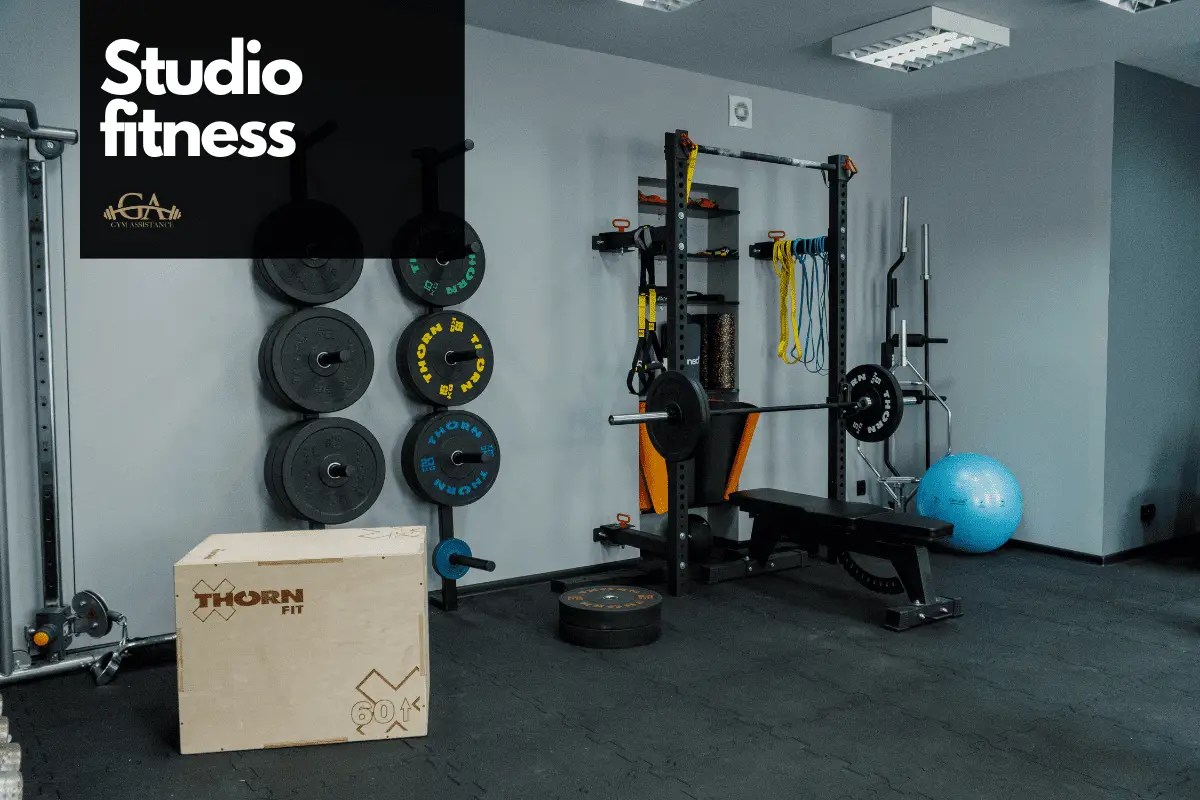
- 4-station modular multi-rack with high/low cable attachments
- 2 × 20 kg Olympic barbells + weight plates to 300 kg
- Rubber hex dumbbells 2–50 kg in 2 kg increments (25 pairs) on step rack
- 4 benches: 2 flat, 2 FID adjustable
- Freestanding lat pulldown and seated cable row unit
- Modular leg press (lightweight construction)
- Modular hack squat station
- Kettlebell rack: 8, 12, 16, 20, 24, 28, 32 kg
Room 2 – Functional and Cardio (90 m²)
Designed for group sessions up to 8 clients and functional movement training.
Infrastructure:
- 6 mm PVC sports flooring over 10 mm rubber underlay – light, shock-absorbing, easy to clean
- LED lighting 4000K, dimmable
- Ceiling speaker audio system – 6 speakers, 200W amplifier
- Blackout blinds – option to project video for group sessions
Cardio equipment:
- 4 commercial treadmills with touchscreen displays and anti-vibration feet
- 2 upright spin bikes
- 2 Concept2 Model D rowing ergometers
Functional zone:
- Wall-mounted Swedish ladder system (6 modules)
- TRX suspension rigs on ceiling rails – 6 simultaneous stations
- Medicine balls 2–10 kg (full set of 9)
- Plyometric boxes – 3 units at 30/45/60 cm
- Resistance bands (3 resistance levels, 5 of each)
- 12 EVA exercise mats
- Foam rollers and mobility accessories
Project and Build Timeline
Design from brief to technical documentation: 3 weeks. Build: 6 weeks – 2 weeks on adaptation works (flooring, lighting, HVAC) and 4 weeks for equipment delivery and installation.
Paweł had a lease running from month one, so speed mattered. The 9-week total from first conversation to first client session was within his target.
Opening and First Months
The studio opened in October. Paweł transferred his existing client base in full and immediately took on 12 from the waiting list. The schedule ran at 85% capacity in the first month of trading.
Why This Matters for UK Personal Trainers
The numbers translate directly. UK PTs paying £600–£1,200 per month for rented studio time are often spending £7,000–£14,000 per year on space they do not own. Paweł’s build-out – two full rooms, commercial-spec equipment – cost approximately £36,000 and broke even in 18 months. After that, every session generates margin that previously went to a landlord.
If you train 25–40 clients per week and are at capacity in rented space, a purpose-built studio repays itself faster than most PT practices assume.