
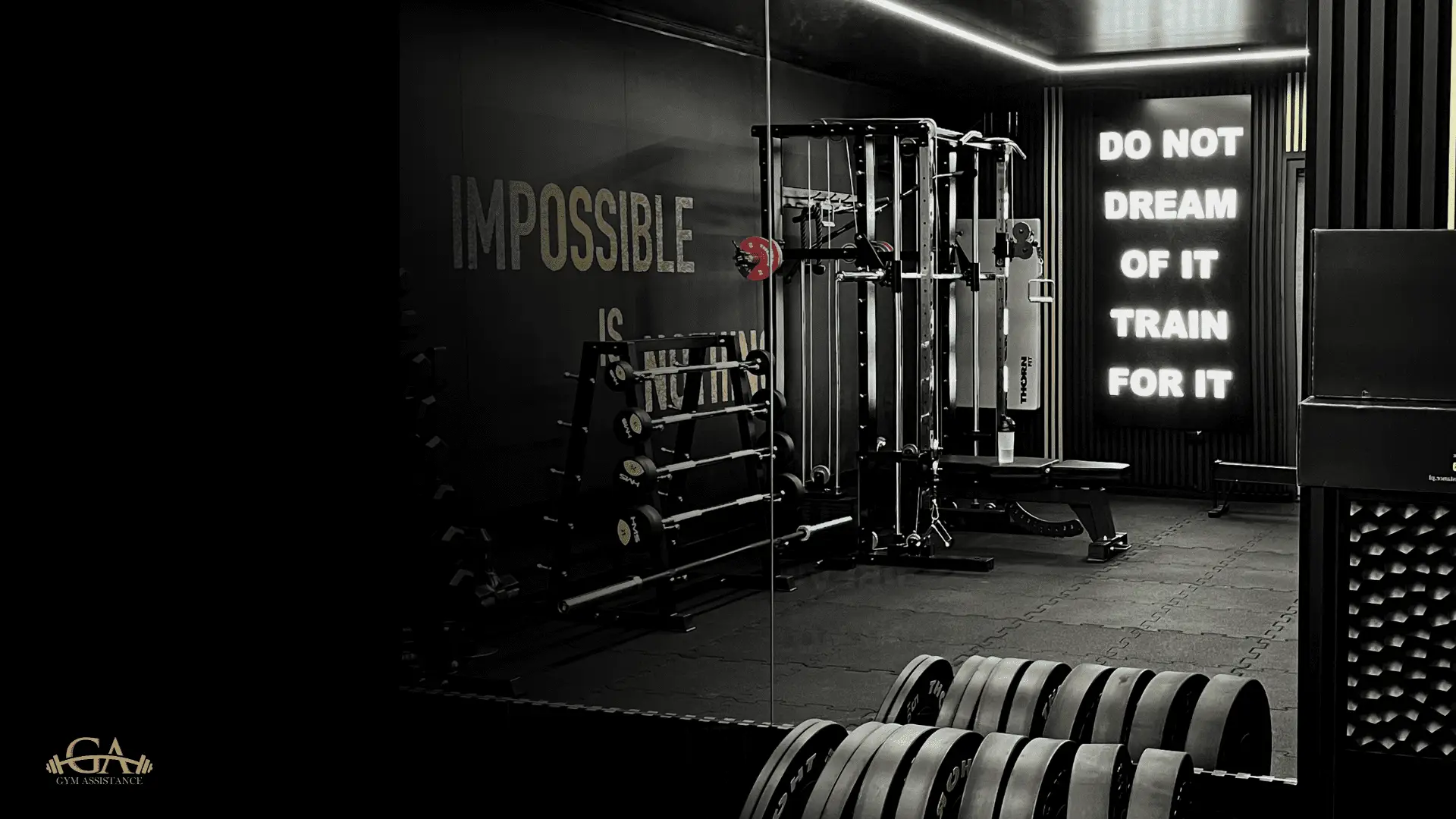
Picture it: the entire front wall of your Gym Box folded away. The gym merging with the garden, the patio, the treeline behind the fence. A workout on the line between inside and out. Not a marketing render — a real option you can spec when you order.
That’s exactly what bifold (HST) and sliding (HS) systems deliver — and more and more clients are asking about them.
Two ways to open up the whole wall
HST — bifold (fold & slide)
Aluminium-framed glass panes that concertina like an accordion — each folding to half its width, so when fully open the whole run stacks to one side and takes up less than 50 cm folded.
➜ Opening: 100% of the wall width ➜ Frame material: aluminium (thermally broken profile — good thermal performance) ➜ Glazing: usually 6 mm toughened, optional frosted or solar-reflective ➜ Running gear: top and bottom aluminium tracks ➜ Minimum width of a single pane: ~90 cm
The effect: the wall “disappears”. The Gym Box becomes an open canopy with a floor and roof — fully integrated with the garden.
HS — sliding
Large glass panes in aluminium frames that slide one behind the other. Partial opening — you can slide part of the wall aside, but not all of it.
➜ Opening: 50–70% of the wall width (depending on configuration) ➜ Cheaper than the bifold ➜ More common — proven, mature technology
Who is this for?
Yes — definitely consider it
➜ A wooded or waterside plot — an open wall creates that unique “training with a view” effect ➜ A plot with a patio next to the Gym Box — extend the training zone outdoors through the summer ➜ A premium holiday let or resort — the “resort look” that lifts your listing above the competition ➜ A combat-sports zone — open-air training in summer, sealed in winter ➜ Owners who value design and a one-off feel — a bifold wall is something no neighbour has
Think it through carefully
➜ Exposed or cooler plots (Scottish Highlands, exposed coastal sites) — large glazed runs always have a lower thermal rating than a solid wall. A closed system has a warm frame and good seals, but it’s not 120 mm of mineral wool. Heating has to work a little harder. ➜ South or west-facing wall — summer sun can overheat the interior. We recommend external blinds or solar-reflective glass.
The good news for most of the UK: winters here are mild compared with central Europe. A well-insulated Gym Box with a bifold wall stays comfortable year-round on a standard heat-pump split running in heating mode — no need to over-engineer for deep frost.
Standard uPVC vs aluminium — why aluminium only?
For standard Gym Box windows we use uPVC profiles (warm, durable, cheaper). For sliding and bifold systems — aluminium only.
The reason: HST and HS systems need precise steel running gear and frames with high rigidity. uPVC flexes on long panes (above ~150 cm) — the doors start to bind after a few seasons.
Aluminium costs more, but it’s the only technically correct choice for these systems.
What does it do to winter insulation?
A fair concern. The facts:
| Element | U-value |
|---|---|
| Module wall with 120 mm mineral wool | ~0.25 W/m²K |
| Standard uPVC window | ~1.0–1.2 W/m²K |
| HS/HST aluminium, thermally broken profile | ~1.4–1.8 W/m²K |
A bifold system has slightly weaker figures than a standard window — but with the rest of the module well insulated and efficient heating (a split AC unit in heating mode), the difference is offset.
Bottom line: a Gym Box with a bifold wall works all year round. For the typical UK winter, a split heat-pump unit handles it comfortably — see our HVAC guide for sizing. If you’re on an exposed plot, size the heating with a little headroom.
How much does a bifold cost vs a sliding system?
| System | Width range | Extra cost vs standard windows |
|---|---|---|
| Sliding HS | 2–6 m | from £2,400–5,600 |
| Bifold HST | 2–5 m | from £4,800–10,000 |
Final pricing depends on the front-wall dimension and the number of panes. The glazing units are built in Poland and shipped flat to site.
We can firm up a figure once you tell us the front-wall width — drop it into the quote configurator and we’ll come back with options.
Examples from real enquiries
Gliwice, Poland (Gym Box 12×4 in a wood): The client asked outright: “I want the front to open across nearly the full width — the unit’s going in among the trees.” We proposed an aluminium HS or HST system as the only technically sound option. The cheaper uPVC route would have started binding within a couple of years on a run that wide.
Olchowiec resort, Poland (holiday property): A corner glazed run (two adjoining glass walls) with a fixed system — the “glass box overlooking the garden and pool” effect. Ideal for holiday lets and guest accommodation where presentation and prestige sell the booking.
Extra options for large glazed runs
➜ External facade blinds — electric, protect against summer overheating (from £240–480 per unit) ➜ Insect screens — for opening windows, a summer essential next to a garden ➜ Solar-reflective glass — reflects part of the solar gain without darkening the interior ➜ Patio awning — over the entrance or front wall, ties the Gym Box into the patio
A quick reality check before you spec it
A full bifold wall is a genuine wow feature — but it’s an upgrade, not a default. If your plot faces a fence two metres away or sits in permanent shade, a standard window run will serve you better and cheaper. The system earns its keep where there’s an actual view to open onto: a garden, a treeline, water, or a patio you’ll genuinely use.
If you’re still deciding on the size and layout before worrying about the glazing, start with how to choose a container gym size and the 6×5 private gym, which has the front-wall width to make a bifold really sing.
Want a Gym Box with an opening wall? Let’s talk — we’ll show you the options for your plot.
Free consultation, reply within 24 hours.
➜ Get in touch with Gym Assistance ➜ Build your spec in the quote configurator
You can write to us in any language — calls and video calls are in English.