
“OK, sounds good — but when will it pay back?” This question shows up in 90% of sales conversations. The answer depends on the scenario: ROI for a family works differently from ROI for a personal trainer or a hotelier. Below are three real cases from our practice, with specific numbers and assumptions.
The important caveat up front: ROI isn’t everything. A Gym Box for a family rarely pays back “economically” in 2 years, but the value of comfort (15 minutes saved on every workout × 4 times a week × 52 weeks = 52 hours per year of life returned) is hard to put in pounds.
Scenario 1 — family of 2–3 (private use)
Profile: family near London, two adults + a teenager. The parents train 4×/week, the son 3×/week. Previously paid £40/person/month membership at a chain gym.
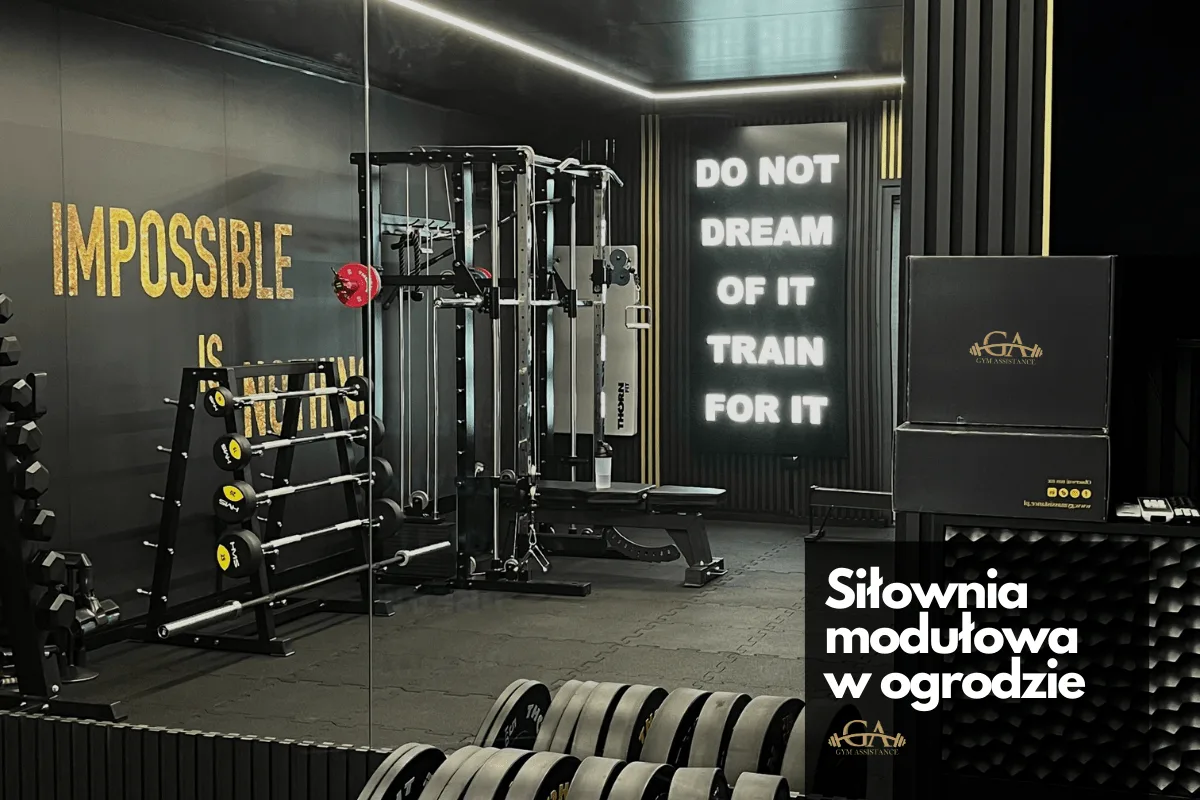
Choice: Gym Box 9×3 Basic from ~£39,200 gross — 350 kg power rack, bench, 2–30 kg dumbbells, rower, air conditioning, mirrors. Plus groundworks and connections ~£1,200.
| Item | Value |
|---|---|
| Total investment | £40,400 |
| Gym memberships (3 × £40) | £120 / month |
| Annual membership cost | £1,440 |
| Gym Box running cost (electricity, service) | ~£16 / month |
| Net monthly saving | ~£104 |
| Economic ROI | ~388 months ≈ 32 years |
But let’s add real driving and time costs:
| Item | Value |
|---|---|
| Travel to gym (10 km × 2 × 4× × 4 wk) | 320 km / month / person |
| Fuel cost (3 people × 320 km × £0.10) | £96 / month |
| Time spent commuting (60 min/session × 12 × 3) | 36 h / month / family |
| Real saving | ~£200 / month + 36 h |
| ROI with commuting | ~202 months ≈ 17 years |
➜ Bottom line: in pure “membership vs cost” maths — ~32 years. With fuel and time — ~17 years. Be blunt about it: for a family this is not an investment that pays back, it’s a comfort and property-value purchase. Chain memberships are simply too cheap to beat. What you actually buy is training at 10 pm after work with no commute, and a fixture that stays with the house.
Scenario 2 — personal trainer / PT studio
Profile: PT with REPS-equivalent certification, 7 years’ experience, was renting a slot at a commercial gym for £400/month + 30% commission on each session (effectively keeping £14 of a £20 charge).
Choice: Gym Box 7×5 studio-level from ~£42,000 net (~£58,600 gross fully equipped for PT) on a plot rented from parents (£0 rent) or bought (£3,000 plot 200 m²). Power rack, plate-loaded, cables, cardio, mobility zone.
| Item | Value |
|---|---|
| Gym Box investment | £58,600 |
| Plot + connections | £4,400 |
| Total investment | £63,000 |
| Number of clients | 30 |
| Sessions / client / month | 4 |
| Session price | £30 |
| Monthly revenue | £3,600 |
| Previous post-commission revenue (chain) | £2,520 / month |
| Revenue uplift | +£1,080 / month |
| Running cost (electricity, internet, service) | £70 / month |
| Amortisation / leasing cost | ~£1,480 / month |
| Additional net profit | −£470 / month |
Read that last row carefully: on the conservative assumptions — 30 clients, 4 sessions each, £30 a session — a 48-month lease costs more than the revenue uplift, so the first four years run at a loss of around £470/month. At £30 a session the studio does not stand up. It starts working once the price and the diary reflect having your own premises.
But that’s a conservative calculation. A PT with their own studio:
- Can raise session price to £35–40 (premium positioning)
- Offers 10-session packs with 5% discount (more cash flow)
- Rents slots to other trainers (1 evening/wk × 4 = £120/month extra)
- Runs small groups (2–3 people × £16/person = £32–48/hour)
| Realistic scenario after 6 months | Value |
|---|---|
| 30 clients × 4 sessions × £35 | £4,200 / month |
| Slot rentals to other PTs (4 slots/month) | £480 / month |
| Mini-groups (8 sessions × £40) | £320 / month |
| Monthly revenue | £5,000 / month |
| Previous net at the chain | ~£1,760 / month |
| Net difference | +£3,240 / month |
➜ ROI: £63,000 / £3,240 = ~19 months. In practice 22–24 months allowing for ramp-up (early clients from previous location + new ones from premises/Instagram).
This is the strongest ROI scenario among our private clients — only the hotel case below pays back faster.
Scenario 3 — boutique hotel / B&B
Profile: 25-room hotel in the Lake District, average price £150/night, annual occupancy 55%. Guests ask about the gym — currently there’s only a yoga mat in the “wellness” room.
Choice: Gym Box 9×3 Basic from ~£39,200 gross set up 30 m from reception, accessible 24/7 via RFID card.
| Item | Value |
|---|---|
| Gym Box investment | £39,200 |
| Groundworks + connections | £1,600 |
| Total investment | £40,800 |
| Rooms | 25 |
| Average price / night | £150 |
| Annual occupancy | 55% |
| Annual room-nights | 5,020 |
| Price uplift after adding the gym | +8% (+£12 / night) |
| Additional annual revenue | £60,240 |
| Running + service cost | ~£600 / year |
| Annual net profit | ~£59,600 |
| ROI | ~8.2 months |
Conservative assumptions (8% price uplift) confirmed across 3 of our hotel installations. In practice we also see:
- Occupancy uplift of 4–6 percentage points (a gym is a filter on Booking.com — “property with a gym”)
- Review score uplift of ~0.3 points (8.7 → 9.0), further boosting conversion
- Business guests (the segment with the highest RPN — revenue per night) actually use the hotel gym in 41% of cases, and 51% count a gym, pool or spa among the amenities that add to their wellbeing (BCD Travel, Hotel booking trends, May 2025, n=1,035)
Comparison table — ROI across three scenarios
| Scenario | Investment | Benefit / month | ROI |
|---|---|---|---|
| Family (pure saving) | £40,400 | £104 | 32 years |
| Family (with time + commute) | £40,400 | £200 | 17 years |
| PT (conservative) | £63,000 | £1,080 | 58 months |
| PT (post ramp-up) | £63,000 | £3,240 | 19 months |
| Boutique hotel 25 rooms | £40,800 | £4,950 | 8.2 months |
Three things that most often distort ROI
- Ignoring the cost of capital. Financing via 48-month leasing adds 8–11% to real cost (£30,000 becomes ~£32,600), but spreads it over 4 years without affecting liquidity.
- Ignoring the marketing effect. A hotel with a gym ranks higher on OTAs. A PT studio with its own Gym Box has content for Instagram. None of that lands on the P&L.
- Missing grants. For PTs and family businesses, grants for sports infrastructure (Sport England Community Asset Fund, regional development funds) can cover 30–50% of net cost.
When Gym Box is NOT worth it
A clear list of when ROI won’t work:
- ✗ Training 1–2 times a month. A £25/month chain membership will do.
- ✗ Flat in a building with a communal gym. Already paid for in service charge.
- ✗ Plot smaller than 25 m² of free ground. Even Gym Box 8×3 needs 24 m² + access.
- ✗ PT studio without a base of 15+ clients. Build the client base first, then invest in the premises.
Summary
Gym Box ROI runs from 8 months to several decades, depending on whether you’re generating revenue (PT, hotel), reducing cost (family) or lifting asset value (developer, association). Only the commercial scenarios (PT, hotel) genuinely pay back — there the Gym Box is a revenue tool. For a family, cash-only payback now runs past 30 years, so treat it as comfort plus property value, not as a return.
Free consultation · Response within 1 working day
We’ll work out your ROI in a spreadsheet based on your specific assumptions (location, business model, financing). No sales pressure. ➜ Get in touch or configure your Gym Box.