
Two good options – one right answer for you
When people come to us saying they want their own gym, the first question is usually the same: a module in the garden or a room in the house?
Both can work, but they suit different people. To be upfront: we build the garden option, the Gym Box. Converting a room is a job for you or a local builder — so here’s the honest picture of both.
Container Gym – what it is and who it’s for
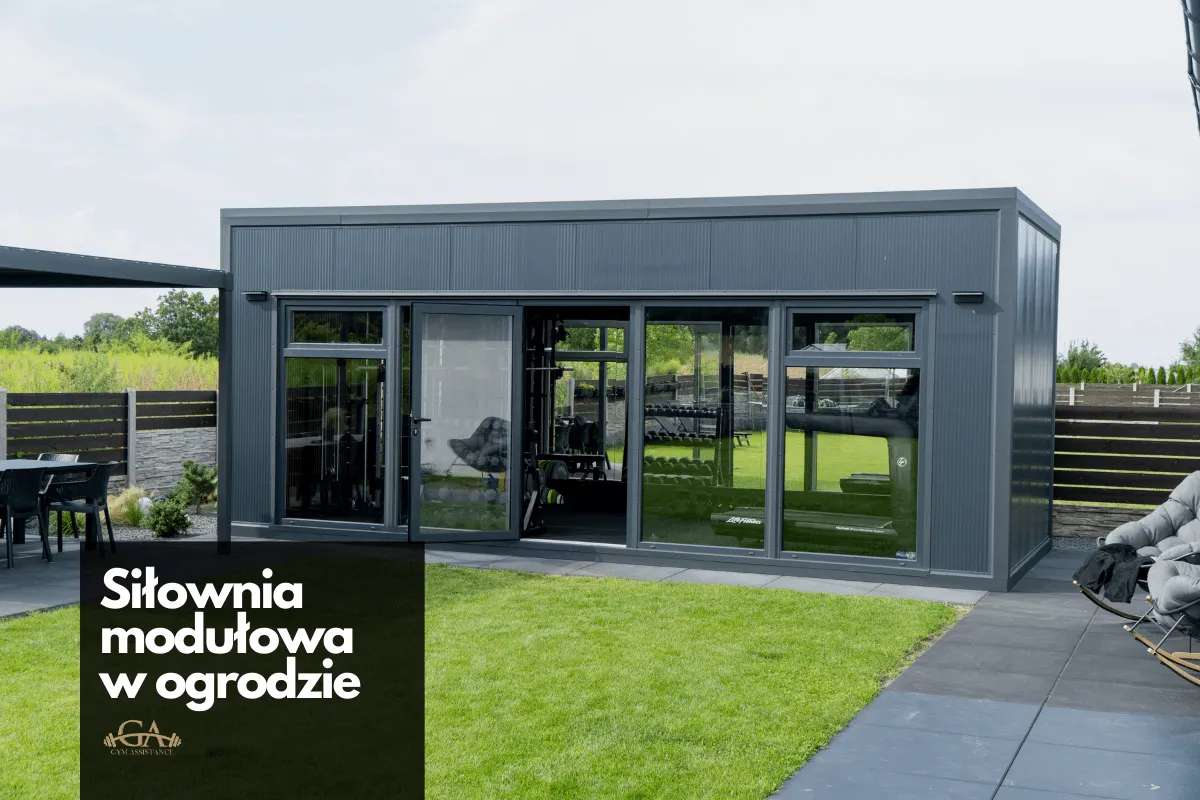
A container gym (like our Gym Box) is a steel module placed on your property. It arrives ready-to-use: insulated, heated, lit, floored, equipped.
Advantages:
- Completely separate from the house – no noise, no mess, no family disruption
- Year-round use – heating keeps it warm in winter, AC cools it in summer
- Often no full planning application – in England many garden outbuildings fall within permitted development if they meet the size, height and siting limits; we check your site for free before you order
- Resale value – adds tangible appeal to your property
- Quick to set up – 12 weeks from your deposit to first training, with the install on site done in 1–2 days
Drawbacks:
- Needs garden space (minimum 8×3 m footprint)
- Higher upfront cost than a basic home conversion
- Requires a foundation (simple concrete pad)
➜ Ideal if: You have a garden, want full separation from living space, and value year-round reliability.
Home Gym Conversion – what it is and who it’s for
A home gym conversion means fitting out an existing space: a garage, basement, spare room or loft — usually as a DIY project or with a local builder. We don’t carry out conversions ourselves; our guides on garage gyms and basement gyms show what’s involved.
Advantages:
- Uses space you already have – no footprint impact
- No groundworks, and usually no planning application (Building Regulations can still apply, especially to a basement or a garage turned into a habitable room)
- Closer to living quarters – easier to pop in for a quick session
- No need for outdoor foundations
Drawbacks:
- Climate control more challenging in older garages/basements
- Sound travels more easily through a house
- Equipment choices limited by ceiling height (especially for racks)
- Resale value addition is less clear-cut
➜ Ideal if: You have an underused garage or basement, budget is a priority, or you don’t have outdoor space.
Side-by-side comparison
| Factor | Container Gym | Home Conversion |
|---|---|---|
| Space required | Garden 8×3 m min | Existing room |
| Entry cost | Higher | Lower |
| Lead time | 12 weeks from the deposit | 1–4 weeks, depending on your builder |
| Climate control | Excellent (built-in) | Varies |
| Planning permission | Often permitted development — check your site | Usually not needed (Building Regulations may apply) |
| Separation from home | Full | Partial |
| Expandable | Yes (add modules) | Limited |
The honest answer
If you have the garden space and budget: choose the container gym. The separation, climate control and year-round reliability make it the better long-term investment.
If space or budget is the constraint: a well-planned home conversion can be excellent — just go in with realistic expectations about damp, ventilation and ceiling height.
Leaning towards the garden? Book a free consultation — we’ll look at your plot and suggest a size — or price your Gym Box in 2 minutes.
You can write to us in any language — calls and video calls are in English.